
What If You Haven’t Worked Since The WGA Strike?
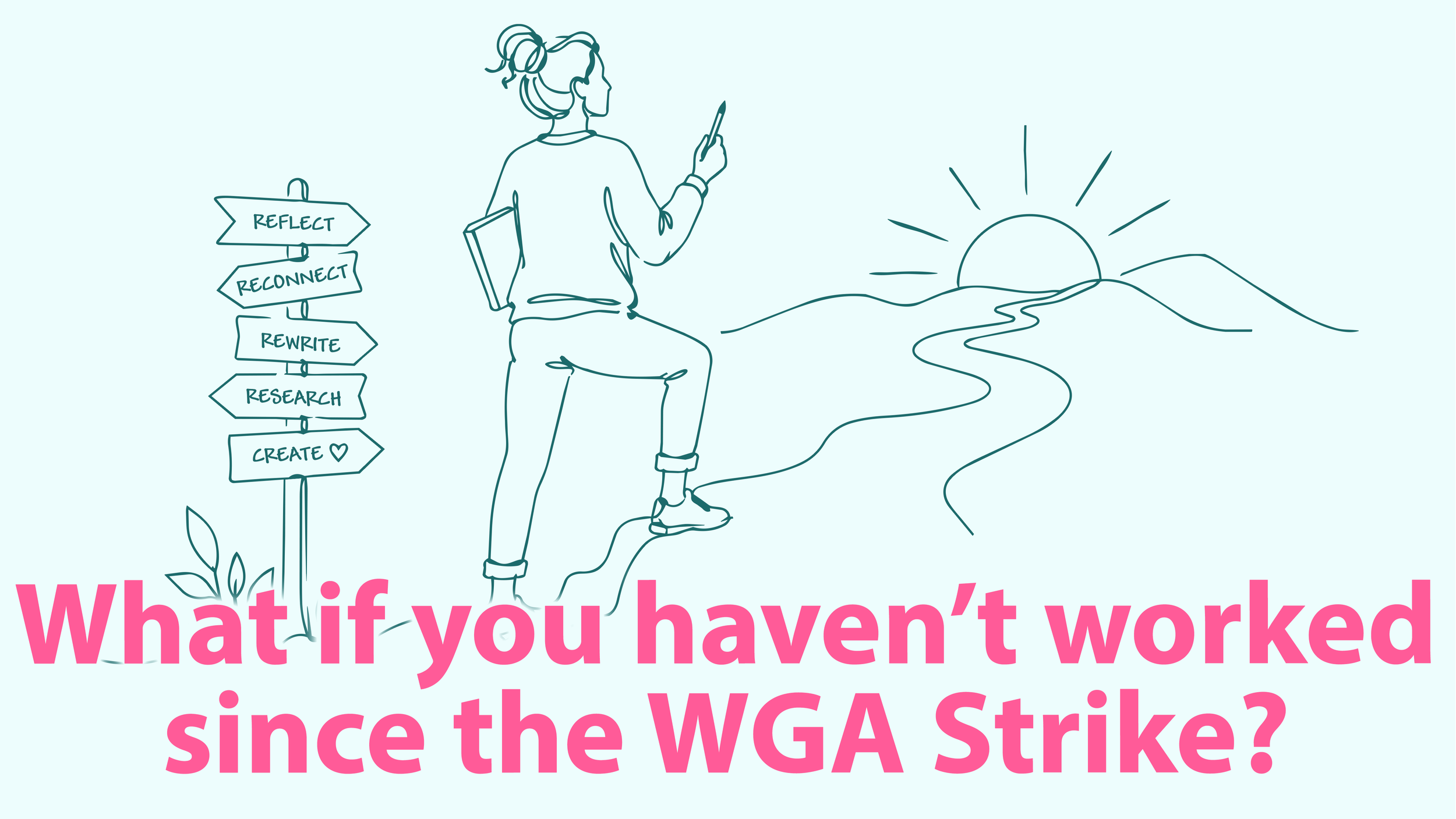
I have a writer client whose last gig was as a Co-EP on a streaming series. Before the strike, she had one job after another, with almost no downtime. Since the strike? Nothing.
When she came to me, she was despondent and questioning whether this business was even the right place for her anymore. Together, we came up with an action plan she could put into place immediately.
The first part of the plan was developing a new sample she could give her reps: something contemporary and high concept. It wasn’t the kind of material she usually writes, but it was the kind of sample that could help kickstart her career again in the current market.
The second thing was to reconnect with all the folks she’d met with over the past five years. Not to ask for jobs, nothing transactional — just reaching out, saying hi, and re-establishing relationships that had gone dormant.
The third part of the plan was practical. She needed income. We talked about her returning to copywriting (something she genuinely enjoys) just until she gains traction in television again and gets her next staffing gig.
None of these ‘action steps’ magically got her staffed. But they did shift her from feeling stuck and despairing to feeling proactive, hopeful, and ready for the next opportunity.
A lot of TV writers are quietly carrying around the same shame right now: I used to be staffed. And now… I’m not.”
It’s no secret, the industry has been different since the strike. Fewer shows are getting greenlit, which means there are fewer jobs to go around. So, many TV writers (some with countless impressive credits and years of experience) haven’t worked since.
There’s a very specific kind of panic that comes with that. Once you’ve “made it”, you assume the hard part is behind you. So when momentum disappears, it doesn’t just feel financially destabilizing — it can feel existential.
First — if this is you, you’re not alone (not that it makes it any less painful).
Second — while there’s no “productivity hack” that can instantly land you in a writers room again, there are practical things you can do during a stalled-out period that can help psychologically, creatively, and professionally.
If this resonates, and you want your own action plan, get in touch. I can work with you one-on-one as a coach to guide you to the right, specific steps to take for your situation.
—
Here a few tips that apply to everyone to keep your footing (and your sanity) during a prolonged stretch of unemployment:
1. Stop treating this like a normal “employment gap”
Some writers are still treating this moment like it’s a temporary “lull”. Like if they just hang tight long enough, the industry will eventually bounce back to the version they built their career in. But the business has changed. And pretending this is just a standard dry spell can prevent you from making clear-eyed decisions about your finances, your creative output, and your future. Don’t get me wrong, this isn’t about becoming pessimistic or hopeless. It’s about assessing your situation honestly and then adapting to what this career requires now. So, look at your finances. Talk openly with your reps and peers about what work is actually available. Be willing to rethink timelines, expectations, and creative strategy. Instead of asking when the old industry is coming back, start figuring out how to build a career in the one that currently exists.
2. Don’t build your identity around being previously employed
This is another trap I see a lot of mid-level writers fall into. They start to over-identify as “someone who used to be staffed,” and begin operating from that loss. Suddenly, everything they write becomes a calculation. Every script idea passes through a filter of desperation, “Can this get me back in a room?” rather than, “Is this strategic for where the market is right now?” These sound like similar questions, but they’re not. The goal is to find script ideas that sit at the intersection of what the industry is looking for and what genuinely excites you as a writer. The problem is when fear and desperation take over and everything you write carries the burden of being ‘the one’ that gets you hired again (writing from that place can become emotionally and creatively draining fast). So try loosening your grip on the identity of “staffed writer” and shift your focus back to the work itself: What kinds of stories are you uniquely positioned to tell right now? What ideas feel both strategic and creatively energizing?
3. If you need another source of income, get one
Seriously. There’s no shame in it. Just because you used to be staffed doesn’t mean you should never make money another way again. I know great writers who also consult, teach, do copywriting, edit podcasts, work in real estate, nanny, sell things online — whatever helps pay the bills. That’s not failure or “going backwards”, it’s strategic and smart (no one can do their best creative work when they’re panicking over making rent). As Hollywood continues to evolve, a lot of people’s careers will probably look more “financially hybrid”. And that’s okay. Having another source of income doesn't make you less of a writer. It makes you less dependent on an industry you can't control.
4. Reassess what you actually want
Unemployment sucks. But it can also be clarifying. Once the momentum stops, a lot of writers realize they’ve been sprinting toward goals they never fully examined. So take this moment to take stock: Do you genuinely love writing for TV? Do you want to spend the next 20 years pursuing that goal, no matter how tough it gets? Or are you chasing this career for validation, the paycheck, or the identity that comes with “making it”? Do you love writing but want a more stable life than this industry currently allows? None of this is a push to quit. It’s permission to take a good, hard look at what this career requires (emotionally, financially, psychologically) and then decide whether that still fits the life you want. There is no wrong answer, and your goals are allowed to change.
5. Don’t isolate yourself
This one matters more than folks realize. Long stretches of unemployment can create a quiet culture of secrecy in Hollywood. People stop replying to emails, avoid coffee meetups, skip networking events and start saying they’re “busy” when they’re really just afraid of being seen as an “out-of-work writer”. (Meanwhile, a huge percentage of the industry is in the same position.) As counterintuitive as it feels, staying connected during periods like this really matters. Not for networking or to “leverage relationships,” but for basic human connection with people who can understand what you’re going through. The writers who last in this business usually aren’t the ones who are perpetually confident or always employed. They’re the ones who learn how to emotionally withstand uncertainty (and that’s much easier to do when you’re not alone).
6. Your career isn’t over
If you haven’t worked since the strike, it doesn’t mean your career is over. But there is less stability now, full stop. Which means staying in the game requires more self-direction, resilience, and adaptability than it used to. Yes, that can be exhausting at times, but (as strange as it sounds) it can also be empowering. It can push you to build a career that’s less dependent on momentum or external validation. Because longevity in Hollywood isn’t about who had the hottest streak in the best market. It’s about who keeps writing and creating when the path forward isn’t clear yet.
What are your tips for surviving long stretches of unemployment? Let me know @carolekirschner.bsky.social!
For more industry info and tips check out these additional resources:
If you're interested in finding out more about my one-on-one coaching, go to: carolekirschner.com/coaching
For the ultimate guide to pitching a TV show that sells, check out my e-book, The Ultimate Guide to a Killer Pitch
To learn how to create your “personal logline” read my free e-book, Tell Your Story in 60 Seconds.
And you can find my book, Hollywood Game Plan on Amazon or at Michael Wiese Productions (MWP).