
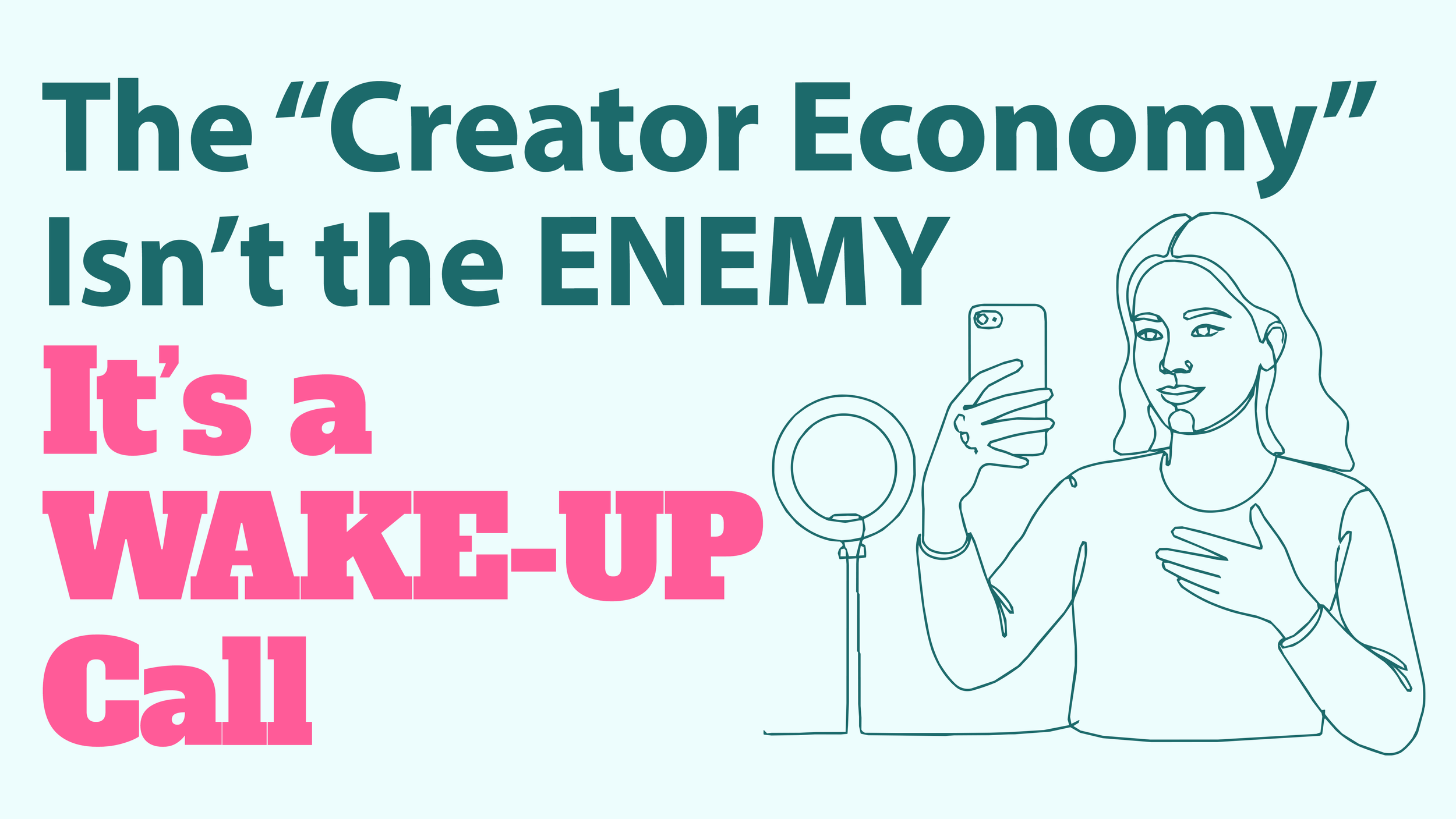
The “Creator Economy” Isn’t the Enemy, It’s a Wake-Up Call
In the book I wrote ten years ago, Hollywood Game Plan: How to Land a Job in Film, TV or Digital Entertainment, I had an entire section on how to “Give Yourself Your Own Big Break.” The idea was simple: don’t wait for someone on the “inside” to open the door and pay you (even back then, the barriers to entry were lower than they’d ever been).
At the time, it felt like a bold suggestion (and frankly, not many folks took my advice). But I knew I was on the right track, and now what once felt like a ‘radical idea’ is undeniable. Creating your own work isn’t just strategic anymore — it can be a source of leverage, freedom, and momentum.
Which brings me to the part that can be uncomfortable for a lot of screenwriters to acknowledge.
YouTubers, influencers, and even TikTok sketch comedians are now out-earning most TV writers and getting more eyes on their work than a “prestige” cable drama. That might feel depressing — but it can also be informative.
Here are a few things you can borrow from the creator-economy playbook to show up online (and off) without selling your soul or starting a dance channel:
1. Personality matters
I know this is the last thing every introverted screenwriter wants to hear, but it’s true: people invest in people, not résumés. When someone is considering working with you — staffing you, buying your script, or developing a project — they’re not just judging your writing, they’re thinking, “Do I want to spend months in a room with this person?” Content creators get this instinctively— their personality matters as much as their content. Their audience is showing up for them as much as their makeup tutorial or clever sketch. So, in your next meeting, pitch, or online post, let people see you; your sense of humor, point of view, and real self. As overused as the word is these days, authenticity builds trust — and trust opens doors.
2. Make something small that belongs entirely to you
One reason creators are thriving right now is that they don’t wait for permission. They give themselves their own “Big Break”. Musicians drop songs on TikTok without a label. Comedians post stand-up clips without a network special. Meanwhile, screenwriters often wait — for a manager’s approval, a greenlight, or the alignment of three moons — before sharing anything. Sure, you need financing to make your TV show or movie. But you don’t need anyone’s money or approval to make something small. So, give it try: if you’re a comedy writer, film a one-minute sketch on your phone and throw it up on TikTok. Wrote a great short story? Post it on Instagram. Curious about Substack? Write a post (even if it’s only for 11 subscribers). Write and produce an 8-minute short film. It doesn’t have to cost a lot. Get your friends to help. Your “small creation” might not equal a script sale, but it will give you agency, boost your visibility, and remind you that creating something and getting eyes on it is entirely within your control.
3. Creators are experts in not being precious
The only way for content creators to test bits, formats, edits, and ideas is to put them online for everyone to see. And sometimes? They fail. Spectacularly. Not in the polite way a script gets a “pass” — but with hundreds of unfiltered comments explaining exactly why something bombed. But here’s the thing: when they fail, they don’t quit. They consider the feedback, take what’s useful, get back up and try again the next day. Channel that energy. Yes, a script needs to be great before it goes out to the town, but there’s room to experiment “publicly” along the way. Send a rough concept to a friend. Test out a few loglines on your reps. Post a joke online to see if it lands. Feedback doesn’t have to be scary or an ‘interruption to your process’ — sometimes it can be a shortcut to your next breakthrough.
4. Online engagement isn’t selling out — it’s staying relevant
Some screenwriters don’t post online because they think it takes too much time and attention away from what “really” matters: writing. And yes, if you’re a screenwriter, creating great scripts should come first. But visibility matters too. Having an online presence isn’t selling out, it’s a way to remind the industry that you exist. This doesn’t mean you need to become a content machine. A monthly update, quick weekly thought, or tiny behind-the-scenes shares is enough to keep you on people’s radar. Not to mention the fact that before you walk into almost any meeting with a decision-maker, they’ve already looked you up on social media and formed an opinion — so you might as well do your best to make it work in your favor. Giving a little attention to your online profiles isn’t wasted time. It’s a strategic form of networking. A simple way to stay visible, memorable, and hard to ignore.
5. Don’t compete with creators — learn from them
The industry isn’t embracing creators because they’re “young” or “trendy.” It’s because they’re self-starting, prolific, and unafraid to be seen. Screenwriters can do the same. This doesn’t mean you need to become an influencer — it means you need to accept that the old rule of “sit quietly, write a good script, and hope someone notices” doesn’t cut it anymore. So show up online a little. Make something small and shareable. Engage with your audience (even if it’s just twelve people). The creator economy isn’t a threat, it’s proof that showing up consistently, putting yourself out there, and taking initiative can pay off.
What are your thoughts on the new “Creator Economy”? Let me know @CaroleKirsch!
For more industry info and tips check out these additional resources:
If you're interested in finding out more about my one-on-one coaching, go to: carolekirschner.com/options
For the ultimate guide to pitching a TV show that sells, check out my e-book, The Ultimate Guide to a Killer Pitch
To learn how to create your “personal logline” read my free e-book, Tell Your Story in 60 Seconds.
And you can find my book, Hollywood Game Plan on Amazon or at Michael Wiese Productions (MWP).